
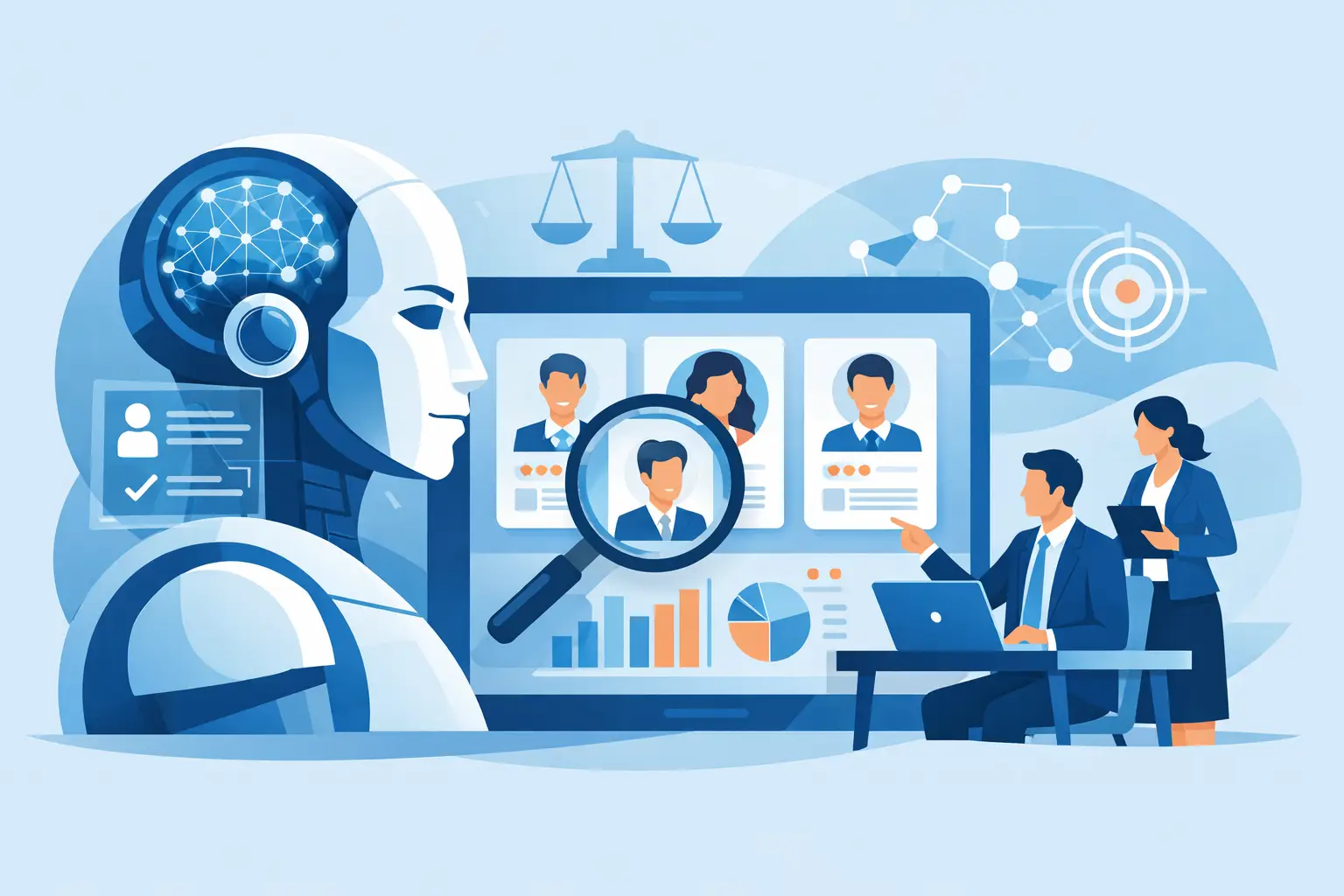
The Future of AI in Employee Evaluation, in Practice
AI inside the review cycle, with the manager still accountable for the decision.
Read article
Employee evaluation software for goals, review forms, self-assessment and 360° feedback — with AI that helps managers write evaluations and produce a clear summary for every employee.
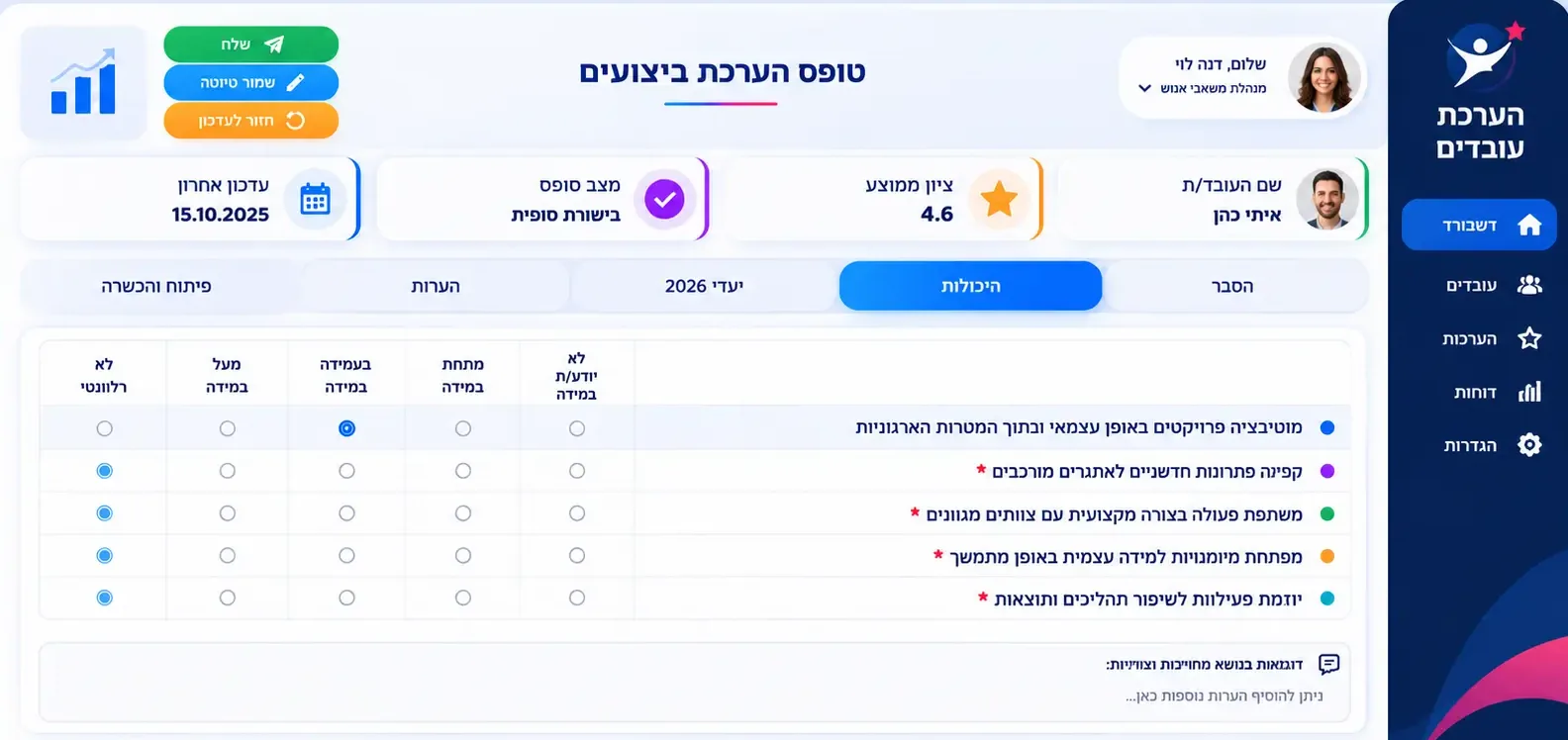
An employee evaluation reviews performance, behavior and goals so the organization can see strengths and skill gaps, support promotion and development, and align a manager and an employee. Without criteria and a record, it stays an impression in a Word file. B2E replaces scattered forms with one cycle: goals, a questionnaire, self-assessment, manager feedback and an AI summary, stored on the employee record.
First cycle: a form, an org structure, and managers who know what to complete.
3–4 weeks for a first cycle when the form and an owner are ready
Criteria, rating scales, and what differs by unit.
Org tree and employee record — so the form is not a separate file.
One unit and a short manager briefing before an organization-wide open.
Open, reminders, and completion tracking for HR.
Manager review, self-assessment, 360° feedback and goals — one organizational frame, not a stack of files.
The direct manager rates performance and adds written comments against criteria, with prior cycles available before the feedback meeting.
The employee completes a self-assessment before the meeting — results, blockers and aspirations — so the conversation starts from facts.
A 360°-style process: manager feedback, self-assessment and additional raters the organization defines, under the same permissions and reporting frame.
Measurable personal goals at the start of the period, evidence collected during the cycle, and a comparison of what was set with what was delivered.
The form defines what is measured. AI shortens the writing. The decision stays with the manager.
Different templates for units, roles and career tracks, with a shared rating scale and one reporting frame.
Two capabilities inside the review, not a separate writing tool. The manager edits and approves before the text is closed.
Free · No commitment · 30-minute walkthrough
Tools that streamline the cycle, help managers write with AI, and give HR and leadership a live view of progress.
Digital and measurable personal goal setting, with direct comparison against actual performance — without unnecessary paperwork and bureaucracy.
Managers can view their employees' data in an organizational tree, see who completed a self-evaluation and who hasn't yet, and view scores in real time.
For senior management and HR managers — a complete overview of all managers and the progress of their employee evaluation processes.
Performance evaluation is a cycle — from goals to a feedback meeting stored on the employee record.
At the start of the period the manager and employee set measurable goals and the criteria for the cycle.
Results, tasks, achievements and feedback accumulate during the period. Before close, the employee completes a self-assessment.
The manager completes a quantitative and written form. The writing assistant helps with wording; the manager owns the content.
The meeting closes the cycle, sets next goals, and the outcome is stored on the employee record.
What you need to run a transparent review cycle — in one place, connected to the employee record.
Evaluee names appear on the manager's employee screen from the org tree — no manual search.
Rate performance and add written comments for each criterion on a structured form.
Drafts, clearer wording and a more consistent tone — without replacing the manager's judgment.
Automatic reminders to managers who are behind the review schedule.
Desired versus actual scores for each manager at their organizational level.
HR and managers see who submitted forms and who is still open.
The employee completes a self-evaluation before the feedback session, as a starting point for the conversation.
The cycle summary captures strengths, gaps and recommendations, and is stored with goals and the development plan.
An interface that simplifies the review — from goals and AI-assisted writing to summary reports.
































"The evaluation system gave our managers the tools they needed to have meaningful performance conversations. It's become an essential part of our HR workflow."
"Before B2E, reviews lived in spreadsheets. Now I can see in real time who completed a self-review, and managers walk into the feedback meeting with data."
"The writing assistant saved managers hours of drafting without replacing their judgment. We closed a review cycle with consistent language across units."
Answers HR managers and team leaders ask before a review cycle.
Employee evaluations work when there are goals, a form with criteria, completion tracking and a link to the employee record — not a Word file once a year.
Organizations run employee evaluations to improve performance, find training needs, support promotion and development, and align individual goals with the unit. That is different from an engagement survey: a survey collects perceptions; an evaluation reviews a person's delivery against what was defined.
Mistakes that repeat: scoring only the last few weeks, vague criteria with no scale, managers who were never calibrated, and feedback with no follow-up. A short form with a definition for each rating level, plus a short briefing before the cycle opens, fixes more than a long questionnaire.
A digital system adds what a document cannot: who is still open, a reminder for anyone late, history, and permissions so a manager sees their own people. When the result is stored on the employee record, the next cycle starts from context. AI tools shorten writing and summaries; they do not replace the conversation.
The guides below go deeper on the form, 360° feedback, goals and AI summaries. This page is the place to evaluate the software; the articles answer the operational question.

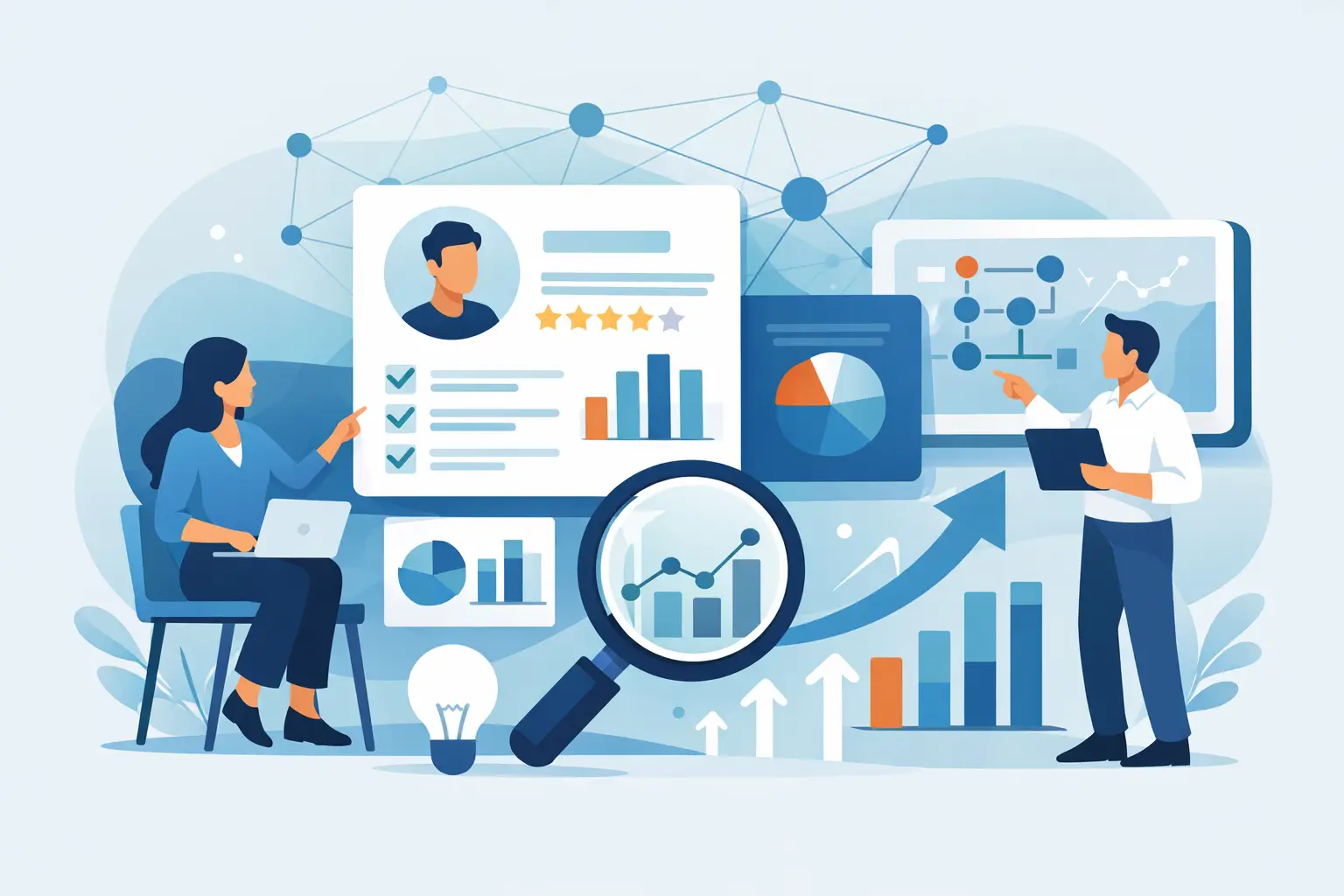
Get a personal demo of the Employee Evaluation system and discover how AI helps managers write evaluations and generate clear summaries.